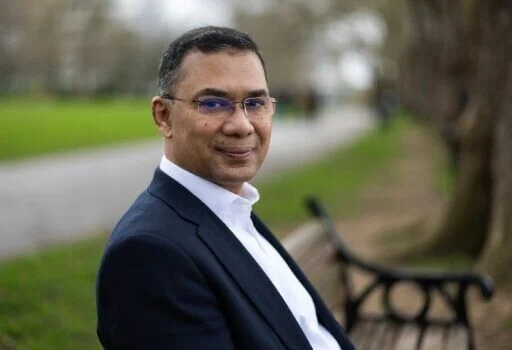
Aspiring prime minister Tarique Rahman has returned to Bangladesh after 17 years in self-imposed exile, greeted by a sea of supporters who flooded the streets of Dhaka to welcome him home.
Rahman — the influential political figurehead of the Bangladesh Nationalist Party (BNP) and son of former prime minister Khaleda Zia — arrived in the capital with his wife and daughter. Smiling and waving to the crowds, he briefly greeted party leaders on the tarmac before being escorted away in a secure convoy, as captured in footage released by the BNP.
Excitement had been building since early morning, with BNP supporters gathering across the city draped in party colors and carrying banners adorned with Rahman’s image. Patriotic songs echoed through the streets, and large cut-outs portrayed him as a symbolic national hero returning to reclaim his place in the political arena.
Rahman left Bangladesh for London in 2008 after what he has long described as politically motivated pressure and persecution. Now acting chairman of the BNP, he returns at a decisive moment — just ahead of the February 12 general election, the first national vote since former prime minister Sheikh Hasina stepped down following last year’s student-led uprising.
With the BNP widely viewed as a frontrunner, Rahman is expected to be positioned as the party’s choice for prime minister should they secure a majority.
His mother, former leader Khaleda Zia — now 80 — remains hospitalized in Dhaka, where she has been receiving intensive medical care following years of poor health and imprisonment. Despite her condition, she had vowed late last year to continue supporting the party’s campaign.
Rahman’s return also follows weeks of tension after the fatal shooting of Sharif Osman Hadi, a popular student leader known for his outspoken criticism of India’s influence in Bangladesh. His death led to violent protests and property damage across Dhaka, including the torching of buildings linked to media and cultural institutions.
For many Bangladeshis, Rahman’s homecoming represents more than the return of a political leader — it marks a moment of uncertainty, hope, and renewal as the nation stands at a crossroads. Behind the headlines are ordinary people searching for stability, dignity, and a voice in their country’s future. Their emotions — joy, doubt, and expectation — mirror the story of a nation still writing its next chapter.