
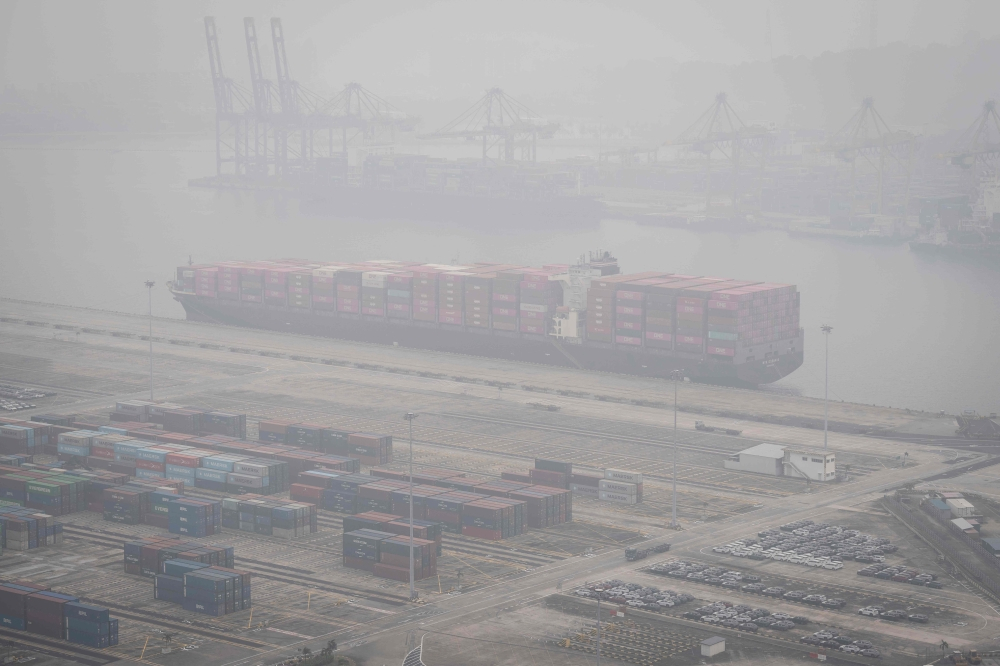
Southeast Asia is facing renewed environmental concerns as fires in Indonesia contribute to worsening haze, prompting the Asean Specialised Meteorological Centre (ASMC) to activate its highest regional alert level for transboundary haze.
The Alert Level 3 announcement signals a high risk of severe haze spreading across national borders, raising concerns about air quality, public health and the impact on communities throughout the region. The alert was reported on Saturday, according to information published on the ASMC website.
Based near Singapore’s Changi Airport, the ASMC monitors weather conditions, fire hotspots and smoke movement across Southeast Asia. Its regional haze warning system operates on a four-tier scale, ranging from Level 0 to Level 3, with Level 3 representing the most serious risk of widespread transboundary haze.
According to the centre, the highest alert may be activated when significant and persistent fire hotspots produce widespread moderate to dense smoke haze over two or more consecutive days. The risk becomes more serious when dry weather continues and prevailing winds carry smoke towards neighbouring Asean countries.
The latest warning is not the first issued this year. Similar high-level alerts were reported on March 27 and August 26, highlighting the recurring nature of the regional haze problem and the difficulties involved in preventing fires from affecting neighbouring countries.
The prolonged haze has already disrupted everyday life in several parts of Southeast Asia. Schools have faced closures, while healthcare concerns have increased as residents report respiratory problems associated with deteriorating air quality. Children, older people and individuals with existing respiratory conditions can be particularly vulnerable when smoke pollution becomes severe.
Singapore has also announced action against businesses allegedly linked to fires in Indonesia. On Friday, the country said it would issue warnings to seven companies it had identified as being responsible for fires. Authorities also cautioned that conditions could deteriorate further, suggesting that the region may face additional challenges if dry weather and fire activity persist.
Transboundary haze remains a complicated regional issue because smoke does not respect national borders. Fires in one country can affect air quality, public health, transportation and economic activity thousands of kilometres away, depending on weather conditions and wind direction. Addressing the problem requires effective fire prevention, enforcement against illegal burning, improved land management and cooperation between neighbouring governments.
For ordinary people across Southeast Asia, the consequences are deeply personal. Haze can mean children staying home from school, outdoor workers facing unhealthy conditions and families worrying about the air they breathe. It can also place additional pressure on healthcare services and businesses already dealing with the effects of environmental disruption.
As the regional alert draws attention to the growing risks, the challenge extends beyond monitoring pollution levels. Lasting progress will depend on preventing fires before they spread, holding responsible parties accountable and strengthening cooperation across the region. Clean air should not depend on which side of a national border someone lives on; it is a shared necessity that demands a shared commitment.