
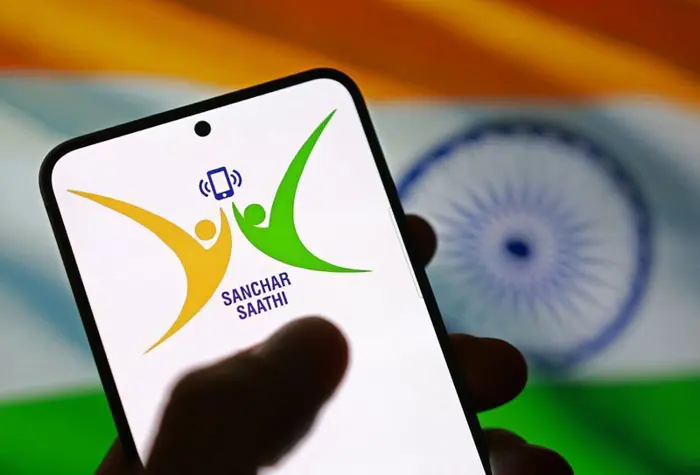
India appears ready to soften its stance on a controversial mandate requiring smartphone manufacturers to pre-install a government-run cybersecurity app, following a wave of public concern and sharp criticism from political leaders, privacy advocates, and industry players.
Telecom Minister Jyotiraditya M Scindia told parliament on Wednesday that the government is open to revising the directive. His remarks came just hours after the opposition and major newspapers voiced serious concerns about privacy and surveillance.
The order, first reported by Reuters, quietly instructed companies such as Apple, Samsung, and Xiaomi to preload a government app called Sanchar Saathi within 90 days. The app is designed to help users track stolen phones and block misuse, according to officials. However, critics fear that compulsory, non-removable government software could become a gateway to intrusive monitoring.
Senior Congress leader Randeep Singh Surjewala demanded clarity on the legal grounds for enforcing such an app, warning that it could contain a “backdoor” compromising user data and privacy. He also called for complete transparency around cybersecurity audits and safeguards that govern the app’s operations.
The government, describing the measure as essential for combating cybersecurity threats, also directed manufacturers to push the app through software updates to devices already in use. They further instructed that the app must not be disabled once installed.
However, the directive has placed India in unusual company. According to industry insiders, only Russia has implemented a similar policy—mandating that state-linked apps be pre-installed on all mobile devices.
Apple, sources say, plans to communicate its objections to New Delhi. The company maintains that such mandates undermine its global privacy standards and could destabilize the security structure of its iOS ecosystem.
The controversy has quickly become a national flashpoint. Prime-time debates are dominated by discussions around digital rights, press editorials warn of creeping surveillance, and the public is voicing a growing sense of unease. The Indian Express described the directive as raising “serious apprehensions of surveillance and intrusion,” while The Times of India urged the government to withdraw the order entirely.
This is not the first time the Modi administration has faced pushback on digital privacy. In 2020, the mandatory COVID-19 contact-tracing app ignited similar concerns and was later made optional after widespread criticism.
Despite the uproar, interest in Sanchar Saathi has surged. According to Sensor Tower, daily downloads spiked by 13 percent on Monday, reaching 78,000.