
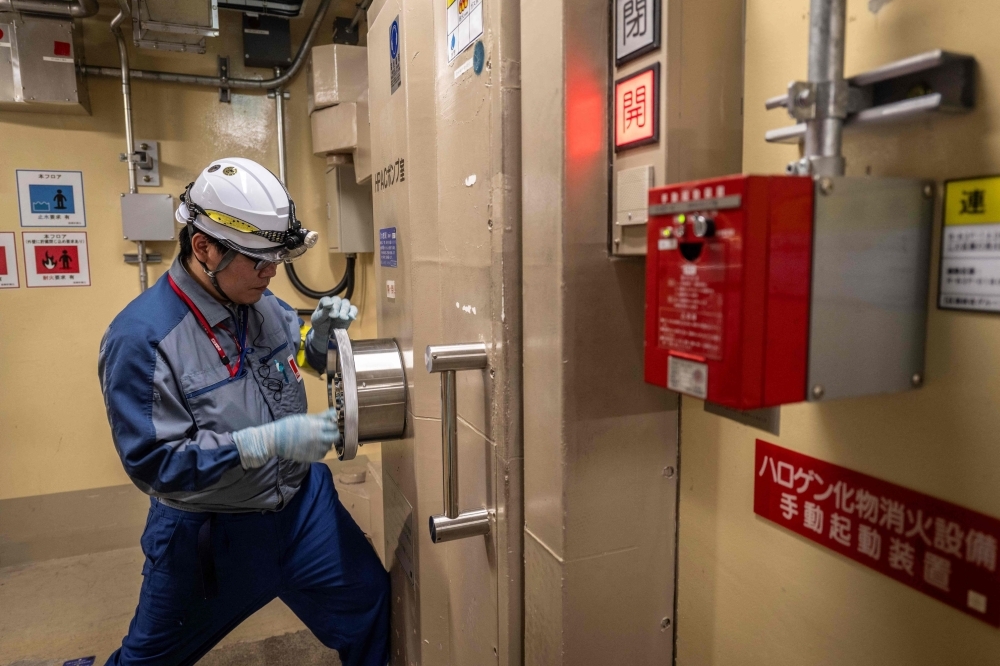
Japan is set to restart the world’s largest nuclear power plant today, marking a historic and emotionally charged moment nearly fourteen years after the Fukushima nuclear disaster reshaped the nation’s energy policy and public trust.
The Kashiwazaki-Kariwa nuclear power plant, located in Niigata province along the Sea of Japan, will begin operations after receiving its final approval. Operated by Tokyo Electric Power Company (TEPCO), the facility has remained offline since 2011, when a devastating earthquake and tsunami triggered nuclear meltdowns at Fukushima Daiichi.
According to TEPCO, preparations are underway, with plans to remove control rods after 7:00 pm and officially bring one reactor back online. While the plant has seven reactors in total, only one will be restarted for now.
Yet outside the plant gates, the mood is far from celebratory. Just a day before the restart, a small group of protesters—many of them elderly—stood in freezing temperatures, voicing fears that have lingered for over a decade. Their message was simple but powerful: the risks, they believe, are being borne by local communities for the benefit of distant cities.
“It’s Tokyo’s electricity that comes from here. Why should we be the ones put in danger?” said 73-year-old resident Yumiko Abe, echoing a sentiment shared by many in the region.
Public opinion remains divided. A September survey showed around 60 percent of local residents oppose the restart, while 37 percent support it. Concerns range from earthquake risks to evacuation challenges, especially given that the plant sits near active seismic fault lines and was damaged by a strong earthquake in 2007.
Despite these fears, Japan’s government sees nuclear energy as a necessary path forward. With limited natural resources, the country aims to reduce its dependence on imported fossil fuels, cut carbon emissions, and meet growing electricity demands—particularly from emerging technologies like artificial intelligence. Prime Minister Sanae Takaichi has openly supported the revival of nuclear power as part of this strategy.
Since the Fukushima shutdown, fourteen reactors across Japan have resumed operations under strict safety regulations, though Kashiwazaki-Kariwa is the first TEPCO-operated plant to restart since the disaster. The company has installed major safety upgrades, including a 15-meter-high tsunami wall and enhanced emergency power systems.
Still, trust remains fragile. Recent issues within Japan’s nuclear sector, including data falsification scandals and system failures during safety tests, have intensified skepticism. On January 8, nearly 40,000 people signed a petition opposing the restart, warning that fear and uncertainty cannot be justified in the name of powering Tokyo.
For many residents, Fukushima is not a closed chapter. “The situation there is still not under control,” said 81-year-old protester Keisuke Abe. “Restarting another TEPCO plant feels unacceptable.”
As Japan moves forward with plans to have nuclear energy supply about 20 percent of its power by 2040, the restart of Kashiwazaki-Kariwa stands as a symbol of the nation’s struggle to balance energy security, climate goals, and the lingering trauma of a disaster that changed everything.
In the end, this is not just a story about reactors and policies—it is about people, memory, and the difficult choices a country must make when the past still feels close to home.


