After 43 tense days that left hundreds of thousands of federal workers unpaid and Washington in gridlock, the longest government shutdown in US history has finally ended. Congress reached a deal yesterday to reopen federal departments and agencies, but not without a storm of partisan blame and frustration.
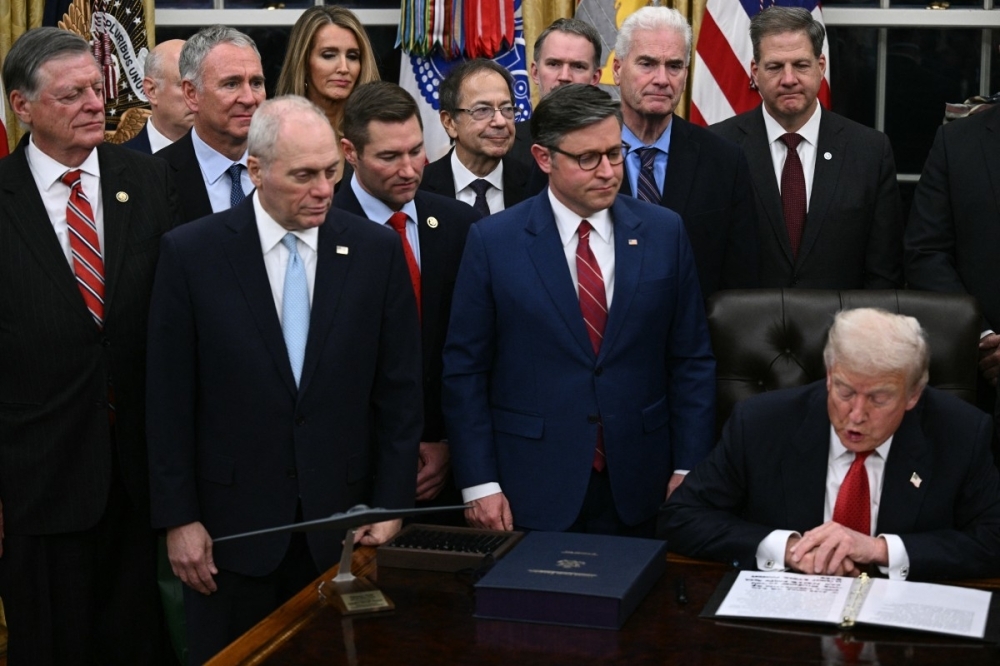
The Republican-led House of Representatives voted largely along party lines to approve the Senate-passed package, which now heads to President Donald Trump for his signature. The package funds military construction, veterans’ affairs, the Department of Agriculture, Congress itself through next fall, and the rest of the government through the end of January.
House Speaker Mike Johnson did not hold back in his speech before the vote: “They knew that it would cause pain, and they did it anyway. The whole exercise was pointless. It was wrong and it was cruel.”
Around 670,000 furloughed civil servants are set to return to work, while over 60,000 air traffic controllers and airport security staff, who had been working without pay, will now receive back pay. Federal workers who were fired during the shutdown are also being reinstated, and the disruption to air travel across the country will gradually normalize.
The White House confirmed that President Trump planned to sign the bill in an Oval Office ceremony at 9:45 pm. On social media, Trump accused Democrats of costing the country $1.5 trillion, though the true economic impact is still being assessed. Estimates from the Congressional Budget Office suggest the shutdown may have caused around $14 billion in lost economic growth.
Despite the closure, tensions remain high. Democratic leaders, frustrated by what they see as concessions from Senate colleagues, maintained a largely unified opposition, highlighting ongoing struggles over health care subsidies and pandemic-era tax credits. Even so, Republicans are generally perceived as having gained more political leverage following the deal.
Outside Washington, Democratic heavyweights and potential 2028 presidential candidates criticized the agreement. California Governor Gavin Newsom called it “pathetic,” Illinois Governor JB Pritzker described it as an “empty promise,” and former Transportation Secretary Pete Buttigieg labeled it a “bad deal.”
As the government reopens, Americans are left reflecting on the human cost of political brinkmanship. Families who went without pay, workers anxious about bills, and travelers stranded by air delays remind us that politics is not just about policy—it’s about people’s lives.