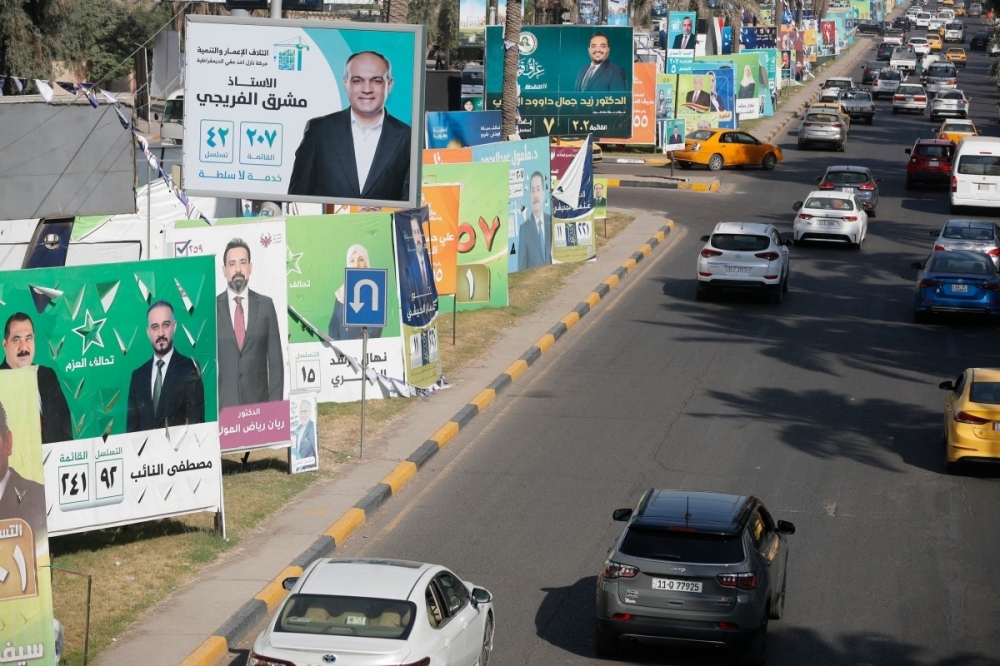
In a historic yet challenging moment, Iraqis head to the polls today to elect a new parliament — a vote that carries deep meaning not only for the 46 million citizens of Iraq but also for the entire Middle East. Both the United States and Iran are watching closely as Iraq navigates a delicate balance of power, seeking stability after decades of war, invasion, and political upheaval.
For years, Iraq has fought to overcome the scars left by dictatorship and conflict. While the country has experienced a period of relative calm, the wounds of poor infrastructure, corruption, and weak public services still run deep. For many Iraqis, hope has faded. The belief that elections can deliver meaningful change has been replaced with skepticism — a belief that power remains concentrated in the hands of political elites and foreign influencers.
Still, the spirit of democracy lives on. More than 21 million people are eligible to vote, choosing from over 7,740 candidates — with women making up nearly one-third. Yet, participation remains a concern; turnout may fall below 2021’s record low of 41 percent. “Every four years, the same thing happens,” lamented university student Al-Hassan Yassin. “We don’t see young faces or new energies capable of making change.”
Iraq’s post-war power structure remains largely unchanged. Shiite parties dominate the political scene, closely aligned with Iran, while the roles of Sunni and Kurdish politicians continue to follow established traditions. Prime Minister Mohammed Shia al-Sudani, who rose to power through the Coordination Framework — an alliance of Shiite factions backed by Tehran — seeks another term, championing stability and reconstruction. Yet, his future depends on how alliances form after the results are announced.
The election also marks the absence of one of Iraq’s most influential figures — cleric Moqtada Sadr. Once commanding the largest bloc in parliament, his withdrawal and call for a boycott have reshaped Iraq’s political field. Meanwhile, Sunni and Kurdish factions prepare for their own internal battles, highlighting the fragmented nature of Iraq’s political landscape.
As the ballots are cast, Iraq once again finds itself at a crossroads — pulled between the rival influences of Washington and Tehran. The United States has recently increased its diplomatic efforts, appointing special envoy Mark Savaya to push for a future where Iraq stands free from foreign manipulation. Meanwhile, Iran remains determined to preserve its influence in Baghdad, even as its regional power faces new challenges.
This election is more than a political event — it is a test of Iraq’s resilience, identity, and hope for sovereignty. Behind every ballot lies the silent plea of a generation yearning for progress, peace, and purpose. For millions, this is not just another election — it is another chance to believe.