
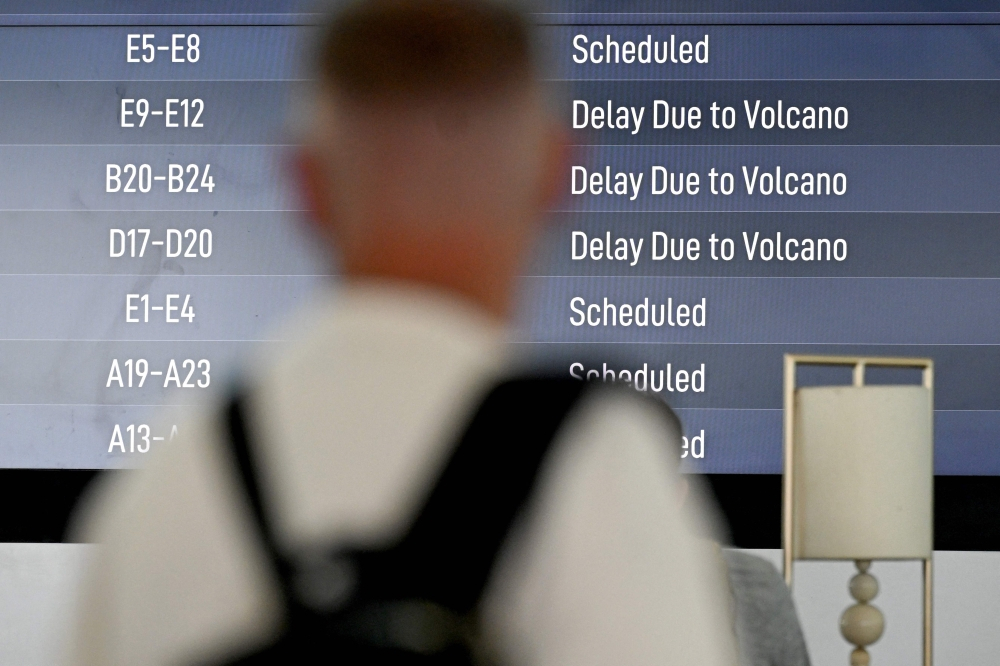
Travel plans across Indonesia have been thrown into uncertainty after volcanic ash from the eruption of Mount Anak Krakatau forced several airports to suspend operations, leaving hundreds of thousands of passengers facing cancelled, delayed, or diverted flights.
Jakarta’s main airport and three other airports extended their temporary closures on Monday as authorities continued to monitor the situation and assess the risks posed by volcanic ash in the airspace.
Mount Anak Krakatau, located around 150 kilometres from Indonesia’s capital, erupted on Saturday, sending lava into the air and producing a large plume of volcanic ash.
The eruption has caused major disruption to air travel, with airports across the region taking precautionary measures to protect passengers and aircraft.
According to Indonesia’s transport ministry, eight airports had suspended operations over the weekend after volcanic ash was detected in their airspace. The disruption has affected thousands of flights and more than 270,000 passengers.
The ministry said the figure represents the cumulative impact since September 5, 2026, including flights that were cancelled, delayed, or diverted.
For many travellers, the disruption has turned what was supposed to be a normal journey home or a long-awaited holiday into a stressful wait with few clear answers.
Travellers Left Waiting for Answers
Italian tourist Michel Miegge was travelling with his girlfriend and was expected to return home in time to go back to work on Tuesday.
Instead, their flight was cancelled.
The 32-year-old software engineer said they were still waiting for information from their airline and were unsure whether they should remain in Jakarta or search for another flight.
Finding accommodation was also becoming difficult, with many nearby hotels already fully booked.
Fortunately, the couple had managed to secure a hotel room for the night, but Miegge said the situation remained difficult and uncertain.
His experience reflects what many other passengers are facing as airlines work through a growing number of cancellations and delays.
Another tourist, French painter Carol Odile, was travelling with a group of friends who were looking forward to visiting Flores and seeing Komodo dragons.
Their plans were suddenly interrupted when they were informed that their flight had been cancelled.
Odile said the group only realised there was a problem when they arrived at the airport and discovered that their flight had been delayed because of the volcanic eruption.
Despite the disappointment, the 60-year-old said the group remained hopeful that they would be able to continue their journey to Flores soon.
Jakarta Airport Closure Extended
At least four airports, including Jakarta’s Soekarno-Hatta International Airport, extended their temporary closure on Monday.
Airport operator Angkasa Pura said the affected airports would remain closed until the evening, with operations expected to resume around 6pm local time, equivalent to 7pm Malaysian time.
Halim Perdanakusuma Airport, a smaller airport in Jakarta that handles both civilian and military flights, was also expected to remain closed.
Meanwhile, another smaller airport in southern Sumatra resumed operations at 9am on Monday, according to Indonesia’s transport ministry.
The situation remains closely monitored as authorities assess whether conditions are safe enough for flights to resume.
Nearly 30,000 Passengers Affected in One Day
The disruption continued into Monday morning.
Soekarno-Hatta International Airport reported that more than 240 domestic and international flights had been cancelled or delayed because of volcanic ash.
Nearly 30,000 passengers were affected by the disruption on Monday alone.
Airport officials said they understood the impact the situation was having on passengers and their travel plans.
Since the temporary closure began, airport authorities said their focus had been on assisting passengers and making sure their immediate needs were addressed while operations remained suspended.
For travellers stranded at airports, however, uncertainty remains one of the biggest challenges.
A cancelled flight does not simply mean changing a travel schedule. For some passengers, it can mean finding another hotel, missing work, changing connecting flights, spending unexpected money, or being separated from carefully planned holidays.
Authorities Warn That the Threat Remains
Indonesia’s geology agency has warned that the possibility of another eruption remains high.
Authorities said the major risks include the ejection of incandescent rocks and heavy ashfall.
If volcanic activity continues, lava flows could also become another potential hazard.
The warning means that airport operations cannot simply return to normal based on the absence of immediate ash alone. Authorities must continue monitoring the volcano and surrounding airspace before determining whether flights can safely resume.
For airlines and airport operators, safety remains the priority, even when thousands of passengers are waiting for their journeys to continue.
Why Anak Krakatau Is Closely Watched
Anak Krakatau, whose name means “Child of Krakatau,” sits in the Sunda Strait between Indonesia’s islands of Java and Sumatra.
The volcano emerged from the sea in the early 20th century within the caldera created by the catastrophic 1883 eruption of Mount Krakatau.
Its history makes the volcano particularly significant.
Anak Krakatau has remained intermittently active over the years, and one of its most devastating events occurred in December 2018.
A tsunami caused by the collapse of part of the volcano killed 429 people and displaced thousands more.
That history is one reason volcanic activity in the area is taken seriously by Indonesian authorities.
The current eruption has already created major consequences for air travel, but authorities are also keeping a close watch on other potential dangers associated with continued volcanic activity.
A Travel Disruption That Is Bigger Than a Cancelled Flight
For passengers caught in the disruption, the story is not simply about airports opening or closing.
It is about people who were supposed to be heading home, returning to work, meeting loved ones, beginning holidays, or finally reaching destinations they had planned for months.
A flight cancellation can be frustrating. But when the reason behind it is an active volcano and potentially dangerous volcanic ash, patience becomes part of staying safe.
Travellers can do little to control volcanic activity, but they can stay informed, follow airport and airline instructions, avoid unnecessary travel toward affected areas, and remain prepared for further schedule changes.
For now, Indonesia continues to watch Anak Krakatau closely while passengers wait for clearer skies and safer conditions.
Sometimes, the most important part of a journey is not reaching the destination on time. It is making sure everyone gets there safely.