North Korea and Russia are moving closer together once again, this time through a new agreement focused on media cooperation and what both sides describe as an ongoing global “information war.” According to reports from their state-run news agencies, North Korea’s Korean Central News Agency and Russia’s TASS have signed an updated pact aimed at jointly responding to what they claim is widespread disinformation coming from multiple adversaries.
The agreement highlights how the relationship between the two nations continues to deepen, not only in political and military matters but also in the way information is shared and defended on the international stage. Officials from both countries say the partnership is meant to strengthen collaboration in reporting and countering narratives they believe misrepresent their positions.
Western governments have long accused Russia of spreading misleading information online and through traditional media channels. Press freedom groups have also repeatedly criticized both Russia and North Korea for tight control over journalism and information within their borders. In global rankings measuring press freedom, both countries are placed near the bottom, reflecting concerns about restrictions on independent reporting.
At the same time, cooperation between Moscow and Pyongyang has expanded beyond media. Reports indicate that North Korea has provided military support to Russia in its war with Ukraine, including troops and ammunition. In exchange, Russia is believed to have supplied financial assistance, military technology, food, and energy resources to North Korea, a country that has long faced economic isolation and international sanctions.
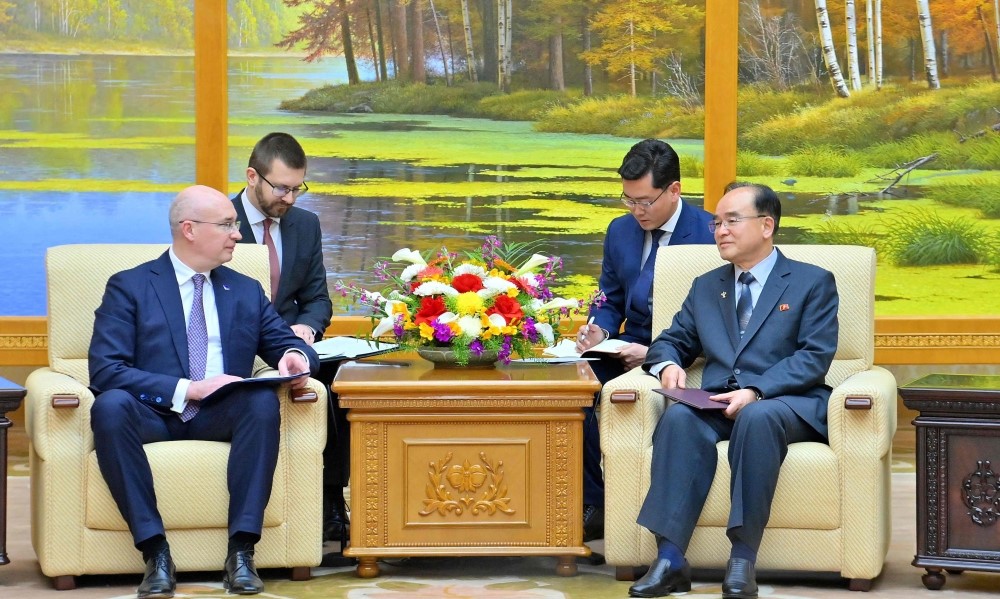
During a recent visit to Pyongyang, TASS Director General Andrey Kondrashov praised the dedication of North Korean soldiers and emphasized what he described as a shared struggle against common threats. He suggested that both countries are facing coordinated campaigns meant to damage their reputations and spread false information about their actions.
According to Russian media reports, the new cooperation agreement was officially signed on March 28. It outlines plans for joint efforts to respond to disinformation not only between the two nations but also within broader international discussions. Officials say the pact reflects what they see as a new phase in global information conflicts.
Kondrashov also stated that the partnership builds on a long history of relations between Russia and North Korea while adapting to modern realities where media influence and digital communication play a major role in geopolitics. In his view, the battle over narratives has become just as important as traditional diplomacy or military strategy.
North Korea’s foreign minister, Choe Son Hui, welcomed the Russian delegation during their visit, according to North Korean state media. Earlier reports suggested the agreement would include the exchange of news materials and closer cooperation between the two agencies, although few specific operational details were publicly shared.
International observers remain concerned about the broader implications of the growing alliance. Media watchdog organizations have pointed out that both governments maintain strict control over domestic information flows. Independent journalism is heavily restricted in North Korea, and journalists in Russia also face significant limitations, according to global press freedom assessments.
Meanwhile, regional tensions continue to shape the partnership. South Korean officials estimate that around 2,000 North Korean troops have been killed in fighting believed to have taken place mainly in Russia’s Kursk region, an area linked to military operations connected to Ukraine’s 2024 incursion.
Political engagement between the two countries has also intensified in recent years. Russian President Vladimir Putin visited North Korea in 2024, marking a significant moment in bilateral relations. Kim Jong Un’s latest known visit to Russia occurred the year before, further signaling the strengthening connection between the two leaderships.
Analysts say the improving relationship may also help North Korea diversify its international partnerships. Historically, China has been its primary supporter, but closer cooperation with Russia could reduce Pyongyang’s dependence on Beijing while opening new economic and strategic opportunities.