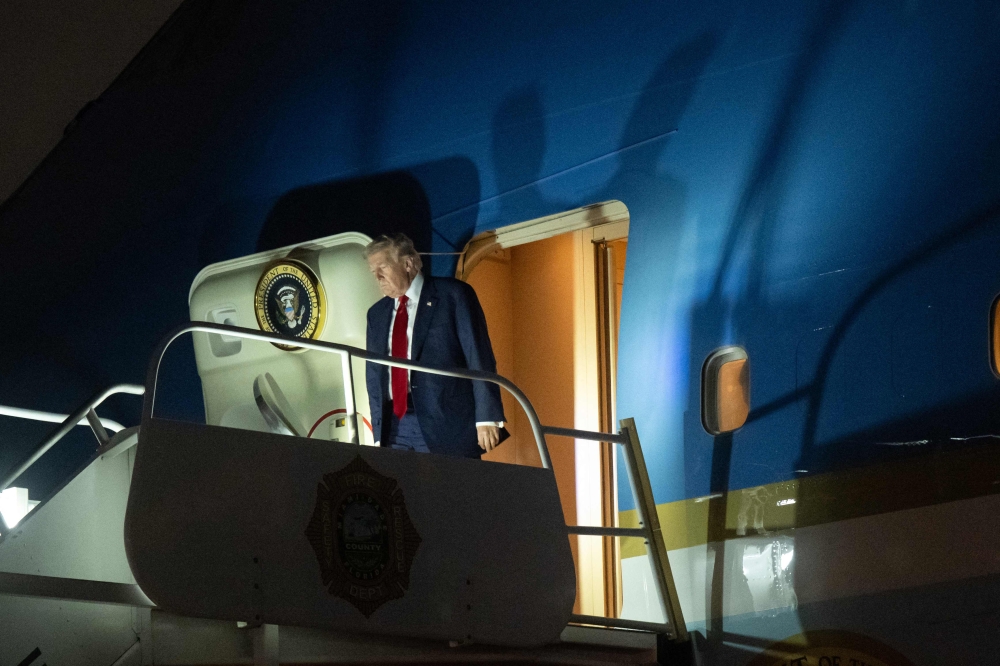
US President Donald Trump is convening a high-stakes meeting today with a dozen right-wing leaders from Latin America and the Caribbean to tackle pressing issues in the region, ranging from organized crime to illegal immigration. The event, dubbed the “Shield of the Americas” summit, is not just about regional security—it’s also aimed at reinforcing US influence in Latin America while countering foreign powers like China.
The summit is being held at Trump’s golf club in Doral, Florida, close to his Mar-a-Lago estate in Palm Beach. Observers say it represents the latest step in what Trump has called his “Donroe Doctrine,” a strategy to expand US authority across the Western Hemisphere.
Trump’s approach has already stirred controversy in the region. His administration has pressured the ouster of former Venezuelan president Nicolas Maduro, working with successor Delcy Rodriguez to claim Venezuelan oil reserves for the US. In recent days, Trump has hinted that Cuba, run by a communist government, could be “next,” following military actions in Venezuela and Iran.
Key Leaders Attend
Among the attendees are Argentina’s Javier Milei, Ecuador’s Daniel Noboa, and El Salvador’s Nayib Bukele, whose security measures are widely seen as a model for the region. Other participants include leaders from Bolivia, Costa Rica, the Dominican Republic, Guyana, Honduras, Panama, Paraguay, Trinidad and Tobago, and Chile’s president-elect Jose Antonio Kast.
Most of these right-wing leaders share concerns about the rising power of drug cartels, which have increasingly affected countries once considered relatively safe, such as Ecuador and Chile. Irene Mia, a Latin America expert at the International Institute for Strategic Studies (IISS), told AFP:
“All those countries used to be quite secure and didn’t really have an issue with organized crime, but they’ve seen increasing levels of organized crime because of the reconfiguration of the drug trade.”
The security challenges in the region have contributed to a series of electoral victories for right-wing governments, making US intervention less controversial than in past decades. Some leaders, like Ecuador’s Noboa, have strengthened ties with Washington since taking office. Just this week, the US and Ecuador announced joint operations against drug trafficking, showcasing a dramatic shift in Ecuador’s security landscape. A video released by the US military and Ecuadorian authorities showed a forested house destroyed in a successful strike against what they called “narcoterrorists.”
Fragile Alliances
While Trump has offered tangible support—like US$20 billion to Argentina or political endorsements that helped leaders such as Honduras’ Nasry Asfura—analysts caution that this conservative coalition may be fragile. Mia notes that the summit’s agenda is largely security-focused, concentrating on migration and organized crime, while missing key players like Mexico and Brazil, currently led by leftist governments.
“Without Mexico and Brazil, it’s not going to be very successful in tackling issues of narcotrafficking and counterterrorism,” Mia said, highlighting Mexico’s role in cartels and Brazil’s critical ports for drug trafficking to Europe.
The alliance of right-leaning Latin American leaders in support of US interests is delicate, given the region’s complex historical relationship with the US. Whether the populations of these countries will approve of Trump’s policies—and for how long—remains uncertain.
In the end, this summit isn’t just about strategy and influence; it’s about the lives and safety of millions of people across Latin America. As the US asserts its role in the hemisphere, regional citizens will closely watch whether these policies bring stability, or more uncertainty, to their streets and borders.