The United States will soon begin paying billions of dollars it owes to the United Nations, with the first payments expected “within weeks,” according to the US ambassador to the UN.
The announcement comes at a critical time for the global organization. UN Secretary-General António Guterres recently warned that delayed and unpaid contributions from member states have pushed the institution dangerously close to a financial crisis. The UN has been struggling with cash flow shortages, forcing hiring freezes, budget cuts, and operational slowdowns across multiple agencies.
Washington currently owes more than US$2 billion in unpaid contributions to the UN’s regular operating budget, along with nearly the same amount for peacekeeping operations. These mandatory dues form a significant portion of the UN’s funding structure, and delays from major contributors like the United States have wide-reaching consequences.
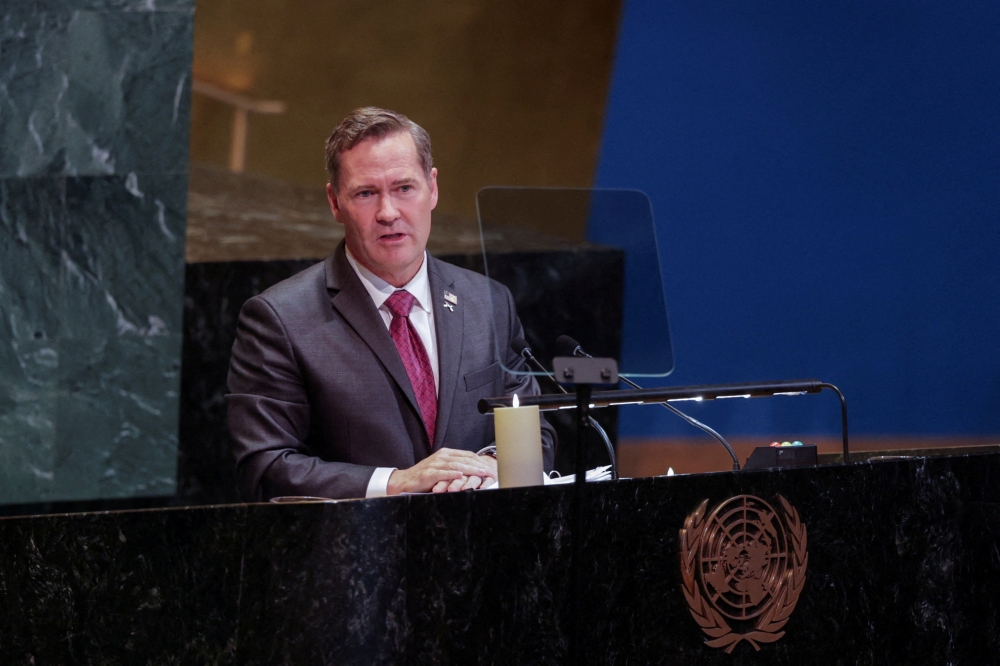
US Ambassador Mike Waltz confirmed that the administration is preparing to address what he described as “amassed dues.” While he did not provide specific figures or a detailed payment schedule, he assured reporters during a visit to Geneva that the funds would start flowing soon.
“We’re going to pay those dues,” he said, emphasizing that payments would begin within weeks.
A UN spokesperson responded cautiously, stating that the organization is waiting for clarity on the timing and the exact amounts to be transferred.
The UN’s financial strain has been building for years. Chronic budget issues stem not only from delayed payments but also from some member states failing to pay their full required contributions. As a result, the organization has had to scale back certain operations and delay projects.
In recent months, the US administration under President Donald Trump has reduced funding to several UN agencies and either rejected or postponed some mandatory contributions. Since returning to office just over a year ago, the administration has also withdrawn the United States from multiple UN bodies, including the World Health Organization.
Despite committing to pay its outstanding dues, Washington has made it clear that financial contributions will go hand in hand with reform demands.
Ambassador Waltz reiterated that the United States will continue pressing for structural changes within the UN. He stressed the need for greater efficiency and accountability across agencies.
“You have to drive reform,” he said. “We’re going to continue sustained pressure on demanding efficiency. We’re going to continue to ask these agencies to do at least the same amount, if not more, with less.”
Waltz acknowledged the reform agenda initiated by Secretary-General Guterres but suggested it should have begun earlier in his tenure. The US position signals that future funding decisions may remain tied to measurable institutional changes.
The broader geopolitical context adds complexity. Critics have expressed concern that recent US actions could weaken multilateral cooperation. Questions have also emerged around the administration’s newly launched “Board of Peace,” with some suggesting it might serve as a parallel structure to the UN.
Waltz dismissed that notion, clarifying that the initiative is intended to complement, not replace, the United Nations.
During his visit to Geneva, home to the UN’s European headquarters and numerous agencies, Waltz also questioned why many UN offices are located in some of the world’s most expensive cities. He suggested that in a digitally connected era, physical location may no longer be as essential as it once was.
At the same time, he rejected calls to reconsider the UN’s headquarters in New York following visa controversies involving certain world leaders last year. According to Waltz, maintaining a single global meeting place remains vital.
“You need one place in the world where everyone can talk,” he said. “And of course, that place will always be New York.”
As the UN awaits the promised payments, the coming weeks will be critical. The financial health of the organization affects peacekeeping missions, humanitarian operations, global health programs, and diplomatic initiatives worldwide. Whether the payments arrive as pledged — and whether reform efforts gain momentum — will shape the future of multilateral cooperation in an increasingly divided world.
At its core, this story is about responsibility and global partnership. When major nations delay commitments, the ripple effects are felt far beyond conference halls and diplomatic corridors. From peacekeeping soldiers on the ground to humanitarian workers delivering aid, funding gaps translate into real-world consequences. The world is watching not just for payments, but for renewed trust and collaboration in a time when unity is needed more than ever.