
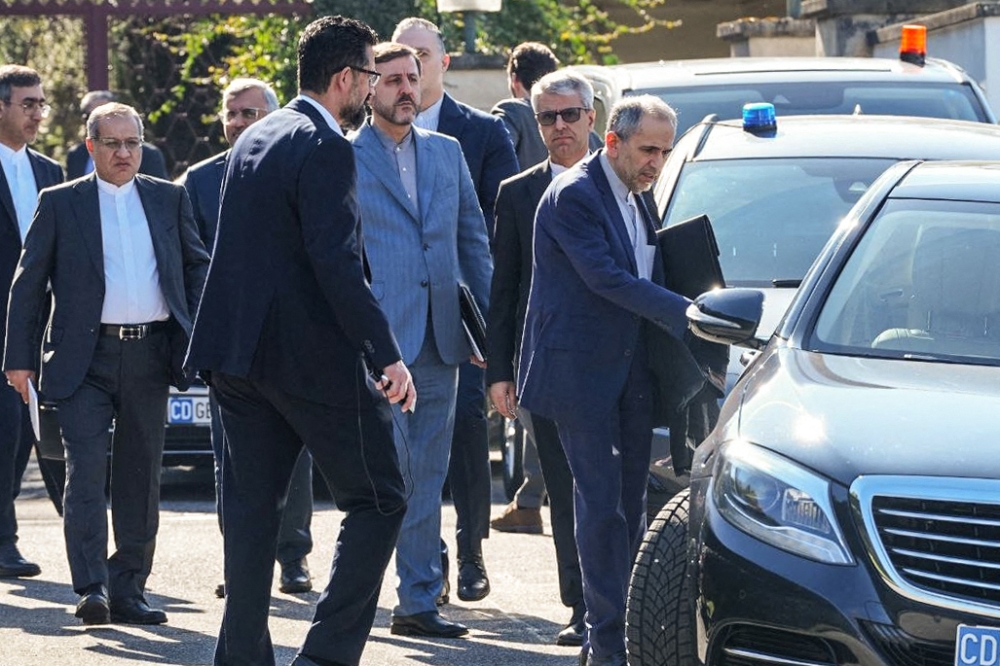
Iran and the United States marked a hopeful step in their high-stakes negotiations on Thursday, with mediators announcing “significant progress” in Switzerland. Both sides have agreed to continue talks next week in Vienna, aiming to ease tensions that have long threatened to escalate into conflict.
The Oman-mediated discussions come after repeated threats from former US President Donald Trump, who last week gave Tehran 15 days to reach a deal. While Iran insists the focus remain on its nuclear programme, the US continues to press for limitations on Iran’s missile program and its support for regional militant groups.
Iranian Foreign Minister Abbas Araghchi told state media that the negotiations “made very good progress and entered into the elements of an agreement very seriously, both in the nuclear field and in the sanctions field.” He added that technical talks at the UN nuclear agency would begin in Vienna on Monday, with the next round likely “in less than a week.”
Omani Foreign Minister Badr Albusaidi confirmed the technical discussions, noting on X that the delegations had “finished the day after significant progress in the negotiation between the United States and Iran.”
The talks unfolded amid the US’s largest military buildup in the Middle East in decades. Both delegations met at the Omani ambassador’s residence under tight security, pausing intermittently to consult with their capitals. Araghchi described the discussions as “the most intense so far,” emphasizing that key issues like sanctions termination and nuclear steps would be explored in greater detail.
UN nuclear chief Rafael Grossi also participated, underscoring the international dimension of these negotiations.
Meanwhile, the US has sent the USS Gerald R. Ford, the world’s largest aircraft carrier, to the Mediterranean, joining more than a dozen warships already stationed in the region — a rare show of military strength that highlights the stakes of the talks.
Trump has repeatedly framed Iran as pursuing “sinister nuclear ambitions,” although Tehran maintains its nuclear programme is strictly civilian. While the US claims Iran’s missiles could reach Europe and overseas bases, Iranian officials counter that the range is far shorter. Observers note that Trump’s rhetoric echoes the prelude to past US interventions, raising concerns about public perception and policy decisions.
For ordinary Iranians, the talks are more than geopolitical chess. Residents interviewed by AFP expressed anxiety about the human cost of renewed conflict. “There would be famine and people would suffer a lot,” said 60-year-old homemaker Tayebeh. “People are suffering now, but at least with war, our fate might be clear.”
As diplomats navigate the fine line between pressure and diplomacy, the world watches closely, hoping that negotiations — rather than conflict — will shape Iran’s future.