
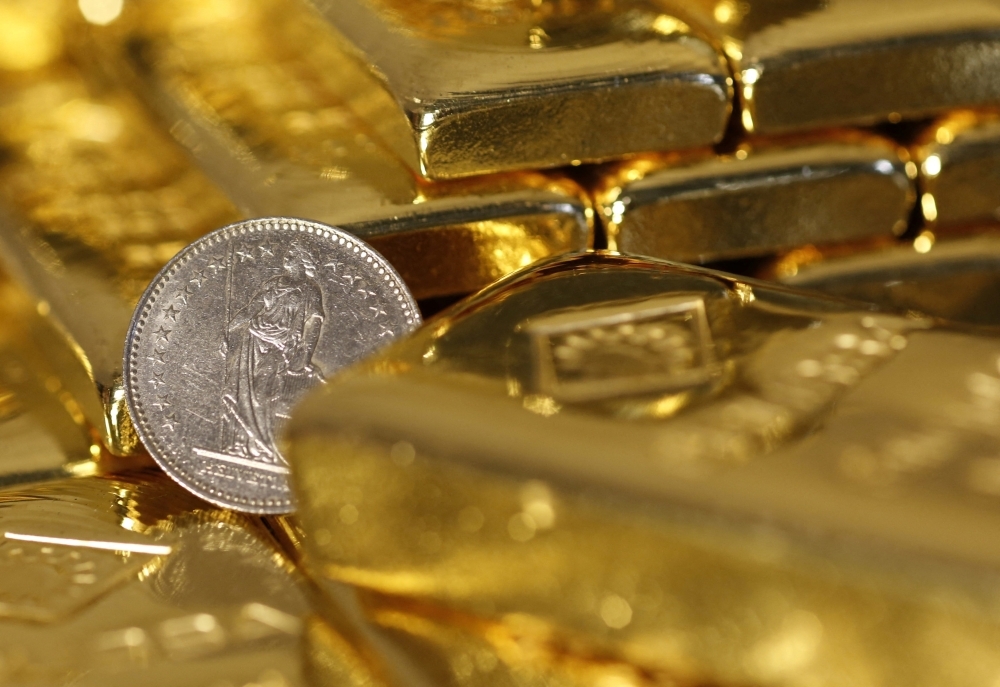
Gold and silver surged to record highs on Monday while global stock markets stumbled, after US President Donald Trump reignited trade war fears with his threat to impose tariffs on several European nations over their resistance to a proposed US takeover of Greenland.
What began as a geopolitical dispute over the strategically located North Atlantic island has quickly evolved into a broader economic confrontation. Trump has repeatedly argued that US control of Greenland is necessary for national security, a claim that has been firmly rejected by Denmark and other European allies.
After diplomatic talks broke down on Saturday, Trump announced plans to impose 10 per cent tariffs on eight European countries — Denmark, Norway, Sweden, France, Germany, the United Kingdom, the Netherlands, and Finland — starting February 1, with the rate rising to 25 per cent by June if they do not comply with his demands.
The reaction from Europe was swift and unified. In a joint statement, the countries warned that such threats “undermine transatlantic relations and risk a dangerous downward spiral,” raising concerns of long-term economic fragmentation between the US and its traditional allies.
German Foreign Minister Johann Wadephul indicated that a recently negotiated US-EU trade agreement may now be at risk, while officials close to French President Emmanuel Macron signaled that the European Union could activate its rarely used “anti-coercion instrument” — a legal mechanism that allows the bloc to restrict US imports in retaliation.
Reports also suggest EU member states are discussing possible counter-tariffs on up to €93 billion worth of American goods, a move that could deepen the economic fallout if tensions escalate.
Financial markets reacted nervously. Safe-haven assets like gold climbed to US$4,690.59, while silver hit US$94.12 — both historic highs — as investors sought protection from uncertainty. Meanwhile, major Asian markets including Tokyo, Hong Kong, Shanghai, Sydney, and Singapore fell, though Seoul and Taipei posted gains.
The US dollar weakened against the euro, British pound, and Japanese yen, reflecting declining confidence in economic stability.
Analysts caution that the real risk lies not just in immediate tariffs but in a broader shift toward politicized trade, supply chain instability, and rising policy uncertainty.
In contrast, China’s announcement of five per cent economic growth last year had little impact on global markets, as the pace slowed significantly in the final quarter.
Despite a warning from US Commerce Secretary Howard Lutnick that South Korean and Taiwanese chipmakers could face 100 per cent tariffs if they fail to invest more in US manufacturing, investors in both regions remained relatively calm.