
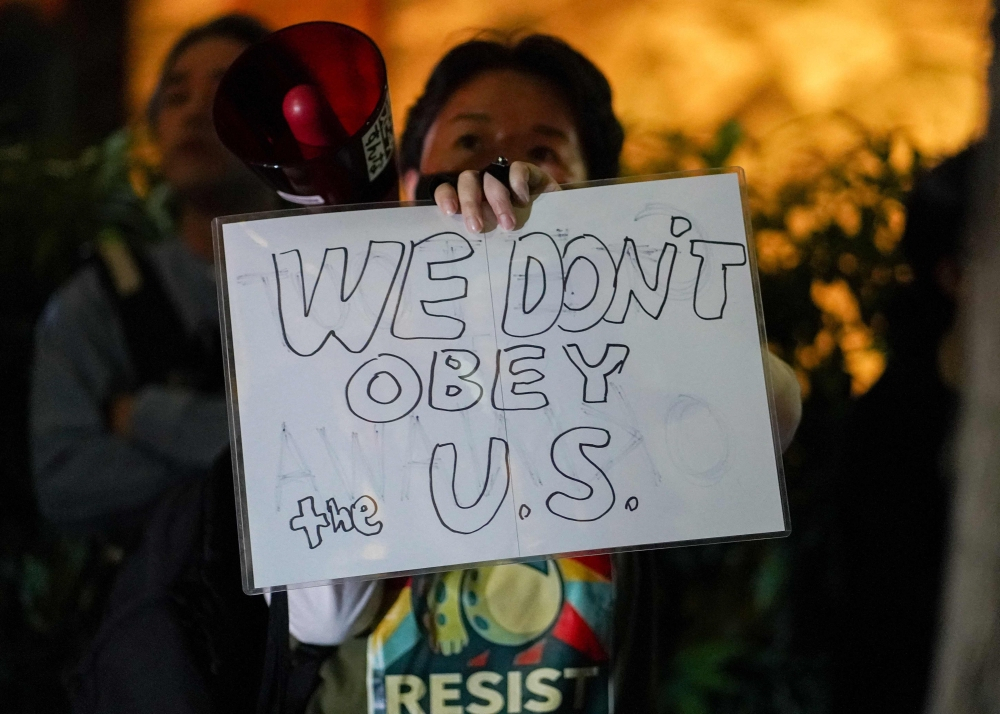
Around 100 Japanese protesters gathered outside the US Embassy in Tokyo, voicing anger over alleged violence involving US military personnel and demanding greater accountability following the reported killing of a 39-year-old woman in Okinawa.
The demonstration came after Japanese police arrested a 20-year-old US Marine stationed in Okinawa on suspicion of killing the woman at a hotel in Naha and allegedly taking her wallet. The incident has triggered widespread public anger and renewed debate over the long-running presence of US military bases on the southern Japanese island.
Holding signs that read “No more American soldiers’ violence” and “Okinawa is not your amusement park!”, protesters chanted against the continued presence of US bases in Okinawa.
For many Okinawa residents, the latest case has reopened painful concerns that have existed for decades. The island hosts a disproportionate share of Japan’s US military facilities, with about 70 percent of US military facilities in Japan located there. Residents have repeatedly protested incidents involving alleged sexual violence, assaults, traffic accidents and other crimes connected to US military personnel.
Sorane Sakihama, a 24-year-old Okinawa native and organiser of the protest, said people living on the island face a level of exposure to the risks associated with US military personnel that is unlike anywhere else in Japan.
She told protesters that raising children under such circumstances feels deeply unfair, describing the situation as one that brings both anger and sadness.
The controversy also highlights the complicated legal relationship between Japan and US military personnel stationed in the country. Under the 1960 security agreement between the two nations, Japan does not have primary jurisdiction over certain crimes committed by US military personnel while they are on duty.
Even when an alleged crime occurs while a service member is off duty, Japanese authorities can face restrictions in taking custody of a suspect if that individual remains on a US military base. The arrangement has been a long-standing source of frustration for communities affected by incidents involving US personnel.
According to Japanese media reports, police in the latest case detained the Marine while he was walking alone through Naha’s entertainment district. The arrest has intensified demands from residents and activists for transparency and accountability throughout the investigation.
The incident has also placed renewed attention on Okinawa’s political leadership.
Protester Naoko Fujihata, 67, said she remains frustrated by what she considers Tokyo’s insufficiently strong response to crimes allegedly involving US military personnel. She said she wants foreign troops to leave the island and plans to closely watch the actions of Okinawa Governor Genta Koja.
Koja has accepted a government proposal involving the US Marine Corps’ Futenma air base. Under the plan, the facility would remain on Okinawa’s main island but be relocated to a less populated area. Local media have reported that Koja is expected to discuss ways of reducing Okinawa’s burden from US military bases during a meeting with Prime Minister Sanae Takaichi.
Takaichi has called on US authorities to fully cooperate with the investigation and maintain strict discipline among US military personnel.
The latest case comes against a backdrop of other serious incidents that have strained relations between Japan and the United States, despite the two countries remaining close security allies.
Last year, a Japanese court sentenced a US Marine to seven years in prison after convicting him of choking and attempting to rape a woman. In another high-profile case, a US military base worker was sentenced to life imprisonment in 2017 for the rape and murder of a woman in Okinawa.
For Okinawa residents, the issue goes beyond one individual case. It touches on a much larger question about security, justice, military responsibility and the everyday burden carried by communities living alongside foreign military bases.
The protesters in Tokyo were not simply demanding answers to one tragedy. Their message reflected a frustration that has been building for generations: Okinawa residents want their safety, dignity and concerns to be treated as seriously as the strategic interests surrounding the US-Japan alliance.
As the investigation continues, public attention is likely to remain focused on whether authorities deliver accountability and whether Japan and the United States take meaningful steps to address the concerns repeatedly raised by Okinawan communities.