France is preparing for another difficult day as authorities plan to fully or partially close as many as 500 high schools amid a rapidly expanding student protest movement. Education Minister Édouard Geffray said the decision was primarily driven by concerns over the safety of students and staff, with another major round of demonstrations expected on Tuesday.
According to the education ministry, classes were expected to be suspended at between 400 and 500 secondary schools on Monday because security conditions were considered insufficient. The number is similar to the disruption recorded at the end of last week, although officials said they hoped schools could gradually begin returning to normal operations.
The situation has become increasingly serious since the protests began in the Paris region in September. What started as concerns over staffing and school conditions has grown into a nationwide movement, with students taking to the streets to demand improvements to the education system.
Students at French high schools, known as lycées, have raised a range of concerns. They have pointed to teacher shortages and long-term staff absences, crowded or demanding schedules and school buildings that they say are poorly maintained. In some areas, students have also complained about the unequal quality of educational facilities available to young people in different communities.
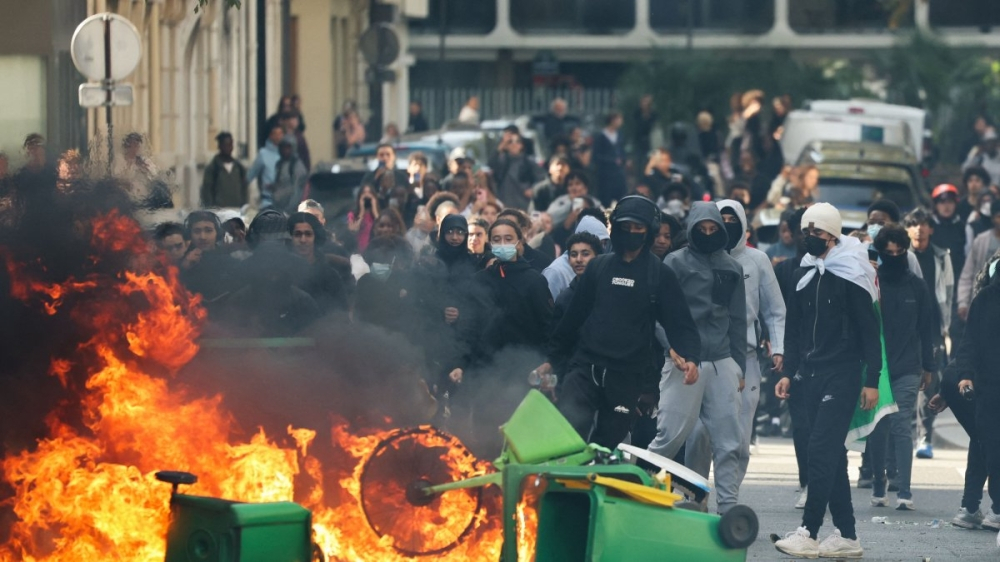
The protests, however, have also been accompanied by incidents of violence and property damage. Geffray said 24 schools had been burned or ransacked since the movement began, while 78 education workers had been injured. Authorities say the damage and attacks have made it increasingly difficult to guarantee normal school operations.
The closures are particularly significant around the Paris region. Regional officials said more than a third of the schools in the wider Île-de-France area were expected to be affected by the unrest. For thousands of families, that means another disruption to lessons at a time when the original demonstrations were intended to draw attention to problems inside the education system.
At a gathering in Saint-Denis, north of Paris, students continued to speak publicly about their concerns over education and their experiences during demonstrations. Some students have also accused police of using excessive force during clashes. Human rights organisation Amnesty International has criticised what it described as disproportionate police violence and called for young people to be able to express their grievances without fear.
French authorities, however, have defended the role of security forces. Interior Minister Laurent Nuñez said police were not targeting young people simply for protesting, but were trying to protect students and staff who wanted to demonstrate peacefully while responding to violence and vandalism.
The government has also acknowledged that some of the students’ concerns require action. Prime Minister Sébastien Lecornu has called for local authorities to prioritise filling vacant positions and replacing teachers who have been absent for extended periods. Discussions are also planned around the condition of school buildings, many of which have been criticised for years over maintenance and infrastructure problems.
The scale of the unrest has added another layer of pressure. Authorities have reported thousands of arrests since the protests intensified, with the majority involving minors. Several serious incidents have also been reported, including an attack on a teacher in southern France and violence involving police officers during demonstrations in other parts of the country.
At the same time, the response from students, government officials, police and rights groups remains sharply divided. Protest organisers argue that demonstrations are necessary because they have not yet received sufficiently concrete commitments from the government. Officials, meanwhile, say legitimate concerns about education cannot justify violence, vandalism or attacks on public servants.
The next major test is expected Tuesday, when organisers have called for another nationwide mobilisation. Teachers’ unions have also expressed support for the students’ concerns, potentially broadening the movement beyond high school campuses.
For many students and parents, the issue now goes beyond whether schools remain open for another day. At its heart is a wider question about what young people should be able to expect from the public education system, from safe and properly maintained classrooms to sufficient teachers and a learning environment where students feel their concerns are taken seriously.
France’s challenge will be to address those concerns while also restoring safety around schools. The coming days could determine whether the protests move toward negotiations and practical reforms or whether further disruption and confrontation follow.
Behind the statistics are real classrooms, teachers, parents and teenagers whose daily education has been interrupted. Students are asking to be heard, while authorities are trying to prevent a protest movement from becoming more dangerous. Finding a way to address both sides of that reality may be the most important task facing France as the demonstrations continue.