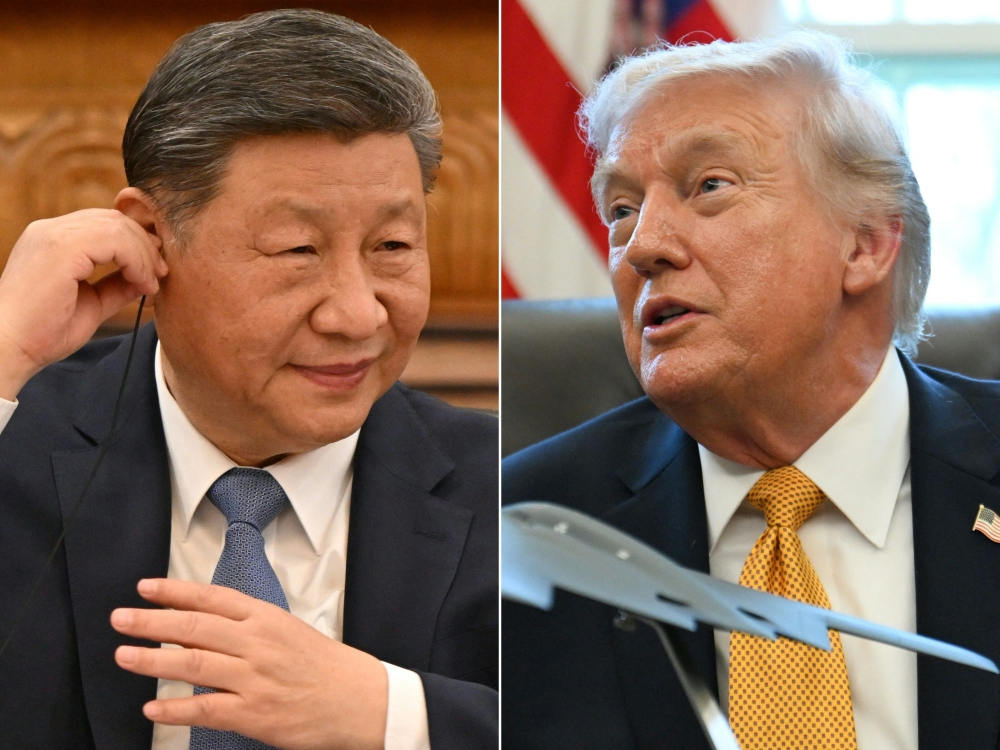
In a move that underscores the urgency of unfolding global events, U.S. President Donald Trump has requested China to delay his highly anticipated summit with Xi Jinping. The decision comes as tensions in the Middle East intensify, demanding his presence closer to home.
Originally scheduled from March 31 to April 2 in Beijing, the summit aimed to rebuild diplomatic momentum between the United States and China while extending a fragile trade truce. However, the ongoing conflict involving Iran has shifted priorities dramatically.
Speaking from the White House, Trump made his stance clear. He emphasized that the delay—expected to be around a month—is not strategic maneuvering but a necessary response to global instability. According to him, being physically present during such a critical time is essential.
Despite the postponement, Trump reassured that relations with China remain stable. He dismissed any speculation of political tactics behind the delay, reiterating that the situation is straightforward: a war is ongoing, and leadership demands presence.
Interestingly, Trump had already hinted at this possibility during an interview with the Financial Times, suggesting that the summit’s timing could also depend on China’s involvement in reopening the Strait of Hormuz—a crucial global oil transit route currently affected by the conflict.
Diplomatic Progress Continues Despite Uncertainty
While the summit faces a delay, diplomatic channels remain active. Over the weekend, U.S. and Chinese officials met in Paris for discussions that both sides described as constructive and forward-looking.
U.S. Treasury Secretary Scott Bessent highlighted the stability in bilateral relations, while Chinese representatives echoed similar sentiments, calling the talks candid and productive. These discussions are seen as laying the groundwork for the eventual summit.
Key figures, including U.S. trade envoy Jamieson Greer and Chinese negotiator Li Chenggang, also contributed to the dialogue, focusing on strengthening economic cooperation.
China’s foreign ministry reinforced the importance of high-level diplomacy, noting that leadership engagement plays a critical role in guiding bilateral ties.
Trade, Tensions, and a Changing Global Landscape
Beyond diplomacy, trade remains a central issue. Discussions have even introduced the idea of a “U.S.-China Board of Trade,” aimed at identifying mutual import and export opportunities to strengthen economic ties.
However, challenges persist. The U.S. recently launched new trade investigations targeting multiple economies, including China, raising concerns about potential tariffs and economic friction. Beijing has responded firmly, urging Washington to reconsider what it describes as unfair trade practices.
Meanwhile, the Middle East conflict continues to ripple across global markets. The partial shutdown of the Strait of Hormuz has disrupted oil supply chains, pushing global oil prices up by as much as 40 to 50 percent. Iran’s actions targeting energy infrastructure have only added to the volatility.
While China’s substantial oil reserves may cushion the immediate impact, its export-driven economy remains vulnerable to prolonged instability in the region.