
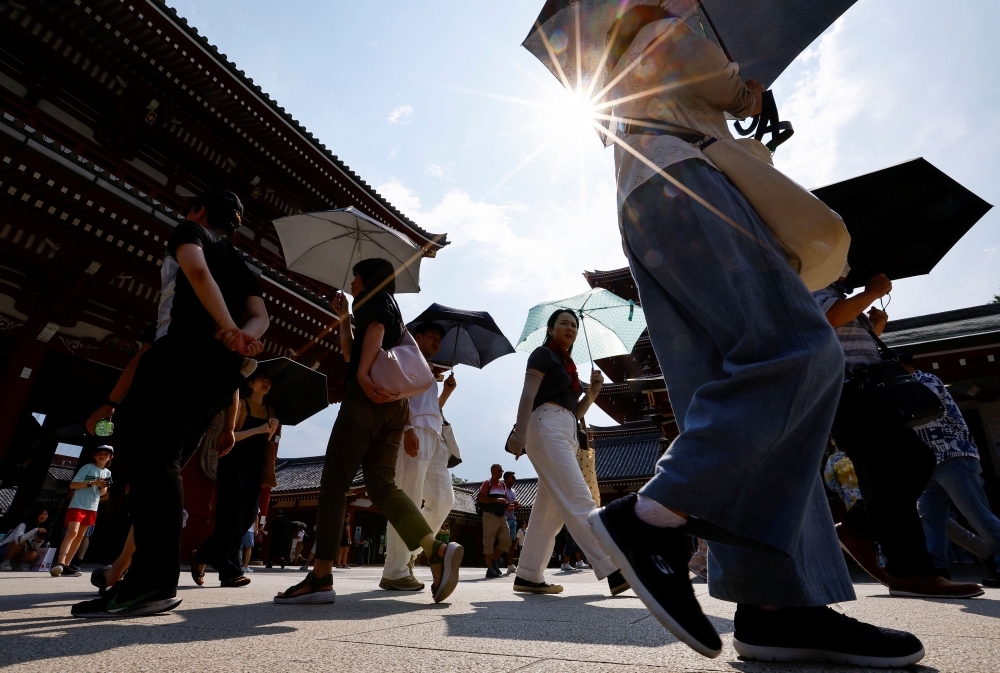
Hundreds of citizens across Japan have filed a lawsuit against the central government, accusing it of failing to act decisively on climate change in what is being described as the country’s first-ever case of its kind.
The landmark lawsuit, submitted today, claims that Japan’s response to the climate crisis is “unconstitutional” and dangerously inadequate. Around 450 plaintiffs argue that the government’s inaction is already harming their health, livelihoods, and basic right to a stable and peaceful life.
“We have officially submitted our complaint and evidence, and the court has accepted our case,” said lead lawyer Akihiro Shima in a statement to AFP.
Among the plaintiffs is construction worker Kiichi Akiyama, who says rising temperatures have directly affected his ability to work. Relentless heat, he explained, forces his team to slow down, leading to major financial losses.
“There are times when people collapse on-site, and in some cases, they’ve even died after returning home,” said the 57-year-old, highlighting the severe toll of extreme heat.
According to Kyoto University assistant professor Masako Ichihara, Japan has seen several climate-related lawsuits in the past, including cases targeting coal-fired power plants. However, this is the first time citizens have sought compensation directly from the state over climate change.
The complaint states that the government’s climate measures are “grossly inadequate,” resulting in violations of citizens’ rights to safety, health, and a stable climate. Plaintiffs point to this year’s record-breaking summer — the hottest since national records began in 1898 — as evidence of the accelerating crisis. Heatwaves, they argue, are damaging crops, causing economic losses, and increasing the risk of deadly heatstroke.
Akiyama shared that outdoor work has become almost unbearable. “What used to take us a day now takes three. I can barely dig for ten minutes without needing to rest,” he said, adding that stronger government action could have prevented the situation from becoming so severe.
Burning Hot Playgrounds, Rising Global Pressure
Japan’s lawsuit mirrors similar legal actions around the world. In South Korea, young environmental activists recently won Asia’s first constitutional climate case. German courts also ruled in 2021 that the country’s climate targets were insufficient and unconstitutional.
The Japanese plaintiffs are seeking symbolic damages of ¥1,000 (about RM25) per person. According to lawyer Shima, the focus is not on financial compensation but on holding the government accountable.
“This case is about responsibility,” he said.
Ichihara noted that while the chances of a legal victory may be slim, the lawsuit’s real power lies in its relatability and its ability to raise public awareness.
Another plaintiff, identified only as Saito, said her motivation comes from concern for her six-year-old son. Record heat has made outdoor play increasingly dangerous, with playground equipment becoming dangerously hot and public pools sometimes closed due to heatstroke warnings.
“Summer used to mean playing outside,” she said. “Now it feels unsafe. Even the playground scares me.”
The lawsuit also criticizes Japan’s current emissions targets, arguing they do not align with the Paris Agreement’s goal of limiting global warming to 1.5°C. While Japan aims to cut greenhouse gas emissions by 60 percent by 2035 and 73 percent by 2040 compared to 2013 levels, the plaintiffs argue these targets fall well short of what climate science demands and are not legally binding.
The complaint concludes that this failure to legislate stronger action is “clearly unconstitutional.”
At its core, this case is not just about policy or numbers. It is about people — workers who can no longer safely earn a living, parents worried about their children’s future, and communities feeling the heat of a crisis they did not create. Whether or not the court rules in their favor, these voices are making one thing clear: climate change is no longer a distant threat. It is already shaping daily life, and citizens are demanding to be heard.