
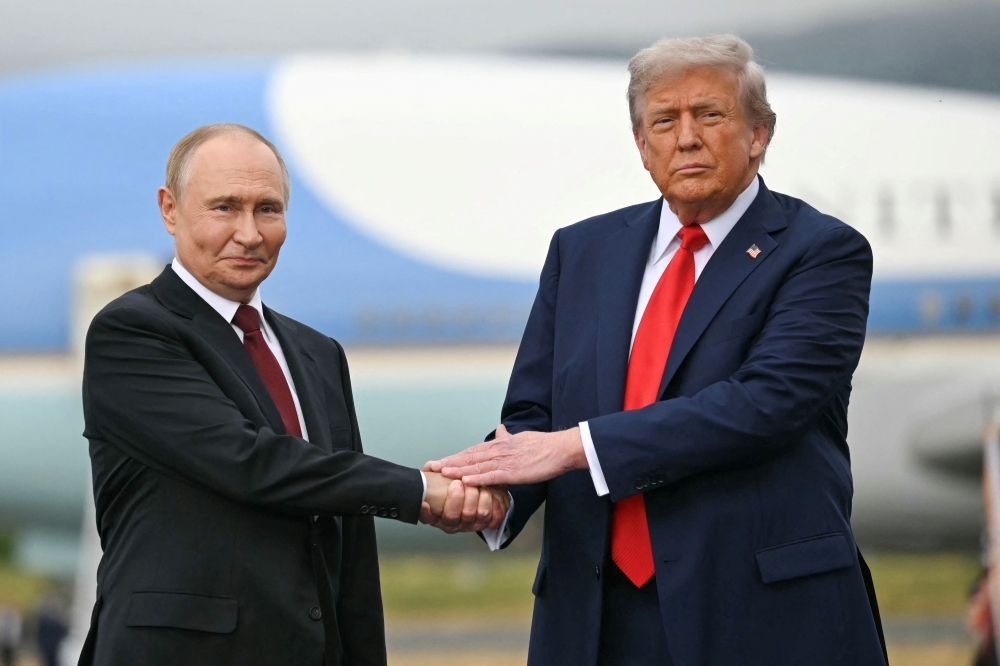
World leaders are responding cautiously to US President Donald Trump’s latest international initiative: a “Board of Peace” that invites countries to pay US$1 billion (RM4.05 billion) for a permanent seat. Analysts say the plan resembles a pay-to-play version of the United Nations Security Council, raising eyebrows across the globe.
The White House reportedly reached out to several prominent leaders, including Russian President Vladimir Putin, Hungarian Prime Minister Viktor Orban, and Canadian Prime Minister Mark Carney, offering them a chance to join the board—chaired personally by Trump.
According to the board’s charter, members can serve a maximum of three years unless they make a cash contribution of US$1 billion in the first year, which would grant them permanent membership.
France and Canada, two key US allies, reacted cautiously. French Foreign Minister Jean-Noel Barrot told lawmakers that France cannot accept the invitation at this stage, highlighting conflicts with the nation’s UN commitments. “It is incompatible with France’s international responsibilities, including its role in the United Nations,” he said.
Canada also indicated hesitation. A government source stated that Ottawa will not pay to join, despite Prime Minister Mark Carney’s initial openness to the idea.
Experts suggest the proposal may be more symbolic than practical. Paul Williams, a professor of international affairs at George Washington University, described it as “an attempt to create a pay-to-play alternative to the UN Security Council where Trump alone wields veto power.”
The board’s charter claims its mission is to “promote stability, restore dependable and lawful governance, and secure enduring peace in areas affected or threatened by conflict,” though it makes no direct mention of Gaza. It also critiques traditional institutions, implying that “failed approaches” need a fresh, decisive framework.
The United Nations itself responded firmly. La Neice Collins, spokesperson for the president of the UN General Assembly, emphasized that “there is one universal, multilateral organization to deal with peace and security issues, and that is the United Nations.”
Some analysts worry that the move could set a troubling precedent for international diplomacy. Daniel Forti of the International Crisis Group noted that while some nations may see an invitation as a chance to influence the US, “actively buying permanent seats in an exclusive club sends a worrying signal about transactional diplomacy.”
The board’s structure would allow Trump significant control, including the power to remove members and select successors as chairman. Current board appointees include Secretary of State Marco Rubio, former British Prime Minister Tony Blair, negotiator Steve Witkoff, and Trump’s son-in-law Jared Kushner. A separate executive committee, intended to advise on Gaza, includes Turkish Foreign Minister Hakan Fidan and Qatari diplomat Ali Al-Thawadi—an arrangement Israel has publicly opposed.
While the initiative is ambitious, many nations may hesitate to join, especially as the global community seeks stability through established multilateral institutions. For ordinary citizens, the plan raises questions about the future of international cooperation and whether peace can ever be bought—or if it must be earned collectively. At its heart, the story reminds us that global diplomacy, despite grand gestures, ultimately impacts real lives, communities, and regions seeking safety and stability.