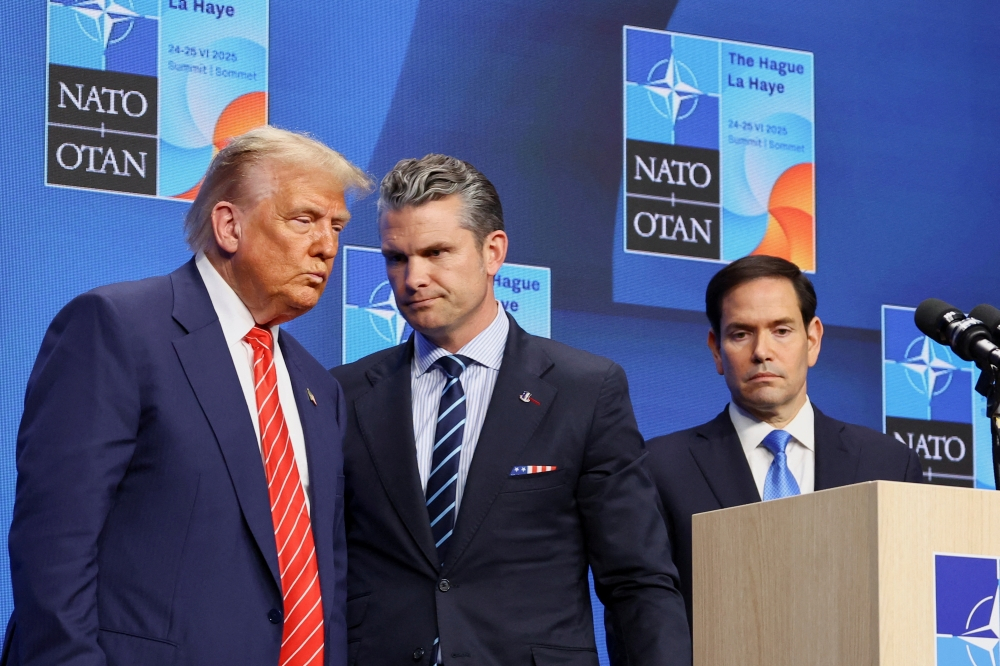
European allies within NATO have taken US President Donald Trump’s concerns seriously and are now actively ensuring that existing military agreements—particularly around the use of bases—are being properly implemented, according to NATO Secretary General Mark Rutte.
Speaking on Monday at a European Political Community summit in Armenia, Rutte acknowledged that while there has been “some disappointment” from the United States regarding burden-sharing and operational support, European countries have responded constructively.
“They are now making sure that all the bilateral basing agreements are being implemented,” Rutte said, emphasizing that cooperation between the US and European allies remains operational despite political tensions.
Tensions have recently escalated after Trump criticized several NATO members for not contributing enough in supporting US-led military actions related to the Iran conflict. This friction was followed by Washington’s announcement of plans to withdraw 5,000 troops from Germany, signaling a notable shift in US military posture in Europe.
Spain has also stated that its military bases will not be used in operations linked to the Iran conflict. However, Rutte noted that many other NATO members—including Montenegro, Croatia, Romania, Portugal, Greece, Italy, Britain, France, and Germany—are complying with requests for logistical support and base access.
Beyond base agreements, Rutte highlighted a growing strategic preparation across Europe. He said several countries are positioning naval assets such as minehunters and minesweepers closer to the Gulf region, preparing for what he described as a possible “next phase” in regional security developments.
In parallel, multiple European nations have expressed willingness to participate in a future mission aimed at safeguarding freedom of navigation through the Strait of Hormuz once the current conflict stabilizes.
The developments reflect a NATO alliance adjusting its coordination under pressure, balancing US expectations with European strategic autonomy while maintaining military readiness in sensitive global hotspots. — Reuters